Mother of DNA

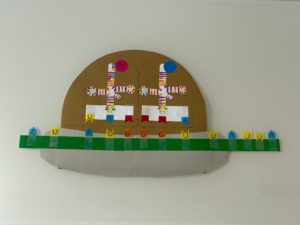
This is a wonderful artwork by a very talented student in my Introduction to Mol. Genetics class. Ms. Amna Alrashid made this portrait of Rosalind Franklin. You can see Amna’s artwork in her social media (Amna Alrashid).

Scientific Report – Fall 2022

Meetings: Wednesdays @ 9am and @ 1pm in my office.

* Absent
? No task received
Students:
  1. Hanan Alfoudari – paper.*/
  2. Asmaa Alghanem – paper./
  3. Hassen Esseyid.?*/
  4. Nouf Aldhafiri – paper.??*/
  5. Lulwah Alsenan./
  6. Fatmah Abdullah – paper./
Activity:
12/10/22:
  • Discussing a blog post.
  • Communication in science: print, poster, talk, video, tweets, blog posts etc.
  • Task after meeting: Write a one page summary of what you learned in Arabic or English and send it to your instructor.
19/10/22:
  • The process of publishing peer-reviewed scientific articles.
  • Task after meeting: Write a one page summary of what you learned in Arabic or English and send it to your instructor.
26/10/22:
  • Searching for scientific papers.
  • Accessing scientific papers.
  • Task after meeting: Find a good scientific paper related to camels and send a pdf to your instructor (paper should be a research peer-reviewed article not published by your instructor).
2/11/22:
  • The structure of a scientific paper
  • How to efficiently read a scientific paper.
  • Reading – Your selected paper from last week.
  • Task after meeting: identify and highlight the discussed sections in your paper and send a pdf to your instructor.
9/11/22:
  • Referencing primary literature.
  • What parts of scientific articles is used as a reference?
  • How to cite scientific communication (articles, books etc.) in your reports? (e.g., Reference managers)
  • Reading – Your selected paper from last week.
  • Task after meeting: From your selected paper, highlight the parts that you want cite and send a pdf copy to your instructor. Send an APA formate of your paper to your instructor. 
16/11/22:
  • Writing scientific material (e.g., writing an abstract and an introduction)
  • Task after meeting: Re-writing (1) the abstract of your paper, (2) outline of the introduction’s paragraphs and (3) the last paragraph of the introduction. Send your writings to your instructor.
23/11/22:
  • Writing scientific material (e.g., writing materials & methods, results and discussion).
  • Task after meeting: Highlight how can the writing of the paper that you selected can be improved. Send a pdf copy to your instructor.
30/11/22:
  • Reading – Cdrom Archive: A Gateway to Study Camel Phenotypes.
  • Task after meeting: Write a one page summary of what you learned in Arabic or English and send it to your instructor. Make sure to explain what parts you can cite from the paper.

7/12/22:
  • Reading – SamplEase: a simple application for collection and organization of biological specimen data in the field.
  • Task after meeting: Write a one page summary of what you learned in Arabic or English and send it to your instructor. Make sure to explain what parts you can cite from the paper.
14/12/22:
  • Reading – Quality and quantity of dromedary camel DNA sampled from whole-blood, saliva, and tail-hair.
  • Task after meeting: Write a one page summary of what you learned in Arabic or English and send it to your instructor. Make sure to explain what parts you can cite from the paper.
21/12/22:
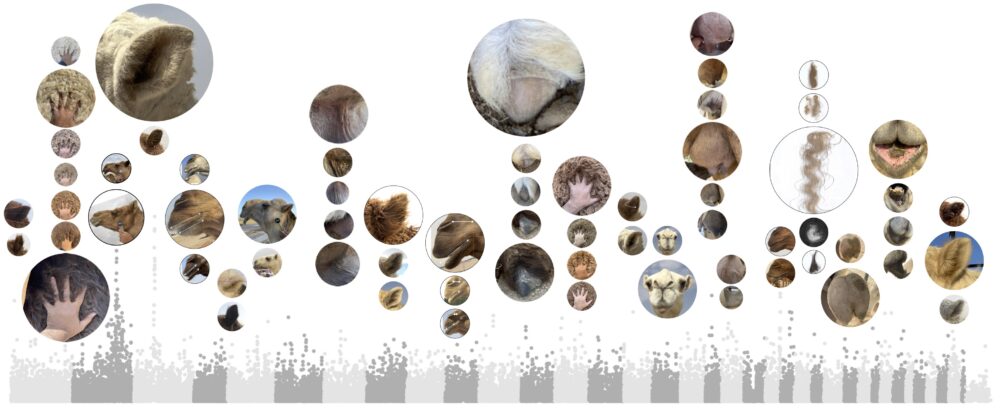
  • Reading – FGF5 missense mutation is associated with dromedary hair length variation.
  • Task after meeting: Write a one page summary of what you learned in Arabic or English and send it to your instructor. Make sure to explain what parts you can cite from the paper.

Research Topics and Seminar I: Fall 2022

Class time and location
Wednesdays 2:00-3:00 (Room: SCI-S Room 179)

* No self-evaluation
* No peer-evaluation
* No response to peer evaluation
* Absence
* No presentation
Participants:
  1. Sara Alsrayea./
  2. Raghad Alrefaei./
  3. Ali Garashi./

Seminar Topics: Medical Biotechnology.

HA selected examples:
Your presentation should include:
  1. Title, student name, course, presentation date-slide.
  2. Paper front page and abstract-slide.
  3. General info about the organism-slide(s).
  4. General info about the problem/goal of the study-slide(s).
  5. General description about the methods used-silde(s).
  6. Result (each figure or table in a separate slide).
  7. Discussion slide about the usefulness of the study.
  8. A final slide about your ideas/suggestions/ethical issues for implementing such studies in Kuwait.
To Do:
  1.  Search for a biotechnology research paper that is related to the seminar topic and send a pdf to your instructor for approval.
  2. Make a powerpoint file named (YourName_501).
  3. Send a copy of your presentation a day before your actual presentation.
  4. Non-presenters should read the paper and prepare to engage in discussion.
  5. If it is possible, we will repeat the process with a second publication.
Useful files:
  1. Powerpoint presentation template ().
  2. Self evaluation template ().
  3. Peer evaluation template ().
  4. Response of peer evaluation template ().
Topics:
Seminar 1 – 5/10/22: Course planning, scientific publications, finding good ones
– HA

Seminar 2 – 12/10/22: How to read a scientific paper? – HA

Seminar 3 – 19/10/22: Making a good presentation – HA

Seminar 4 – 26/10/22: Hematopoietic Stem Cell Gene Therapy with a Lentiviral Vector in X-Linked Adrenoleukodystrophy – Sara Alsrayea

Seminar 5 – 2/11/22: Development of small interfering RNA delivery system using PEI-PEG-APRPG polymer for antiangiogenic vascular endothelial growth factor tumor-targeted therapy – Raghad Alrefaei

Seminar 10 – 7/12/22: Studies on the immunogenic potential of plant-expressed cholera toxin B subunit – Sara Alsrayea

Seminar 11 – 14/12/22: Tumor selective uptake of drug-nanodiamond complexes improves therapeutic outcome in pancreatic cancer – Raghad Alrefaei 

Intro. to Genomics – Fall 2022

Class time and location
Sun, Tue, Thur – 12:00-12:50 (Room: SCI-S-119)


Projects:
Group 1: Felis catus, Presentation:
  1. Bedour Almutairi, Paper, Sup.material.**/
  2. Dalal Almayas, Paper, Sup.material./
  3. Sarah Alresheedy, Paper, Sup.material.*********/
  4. Noor Khanafer, Paper, Sup.material./
Group 2: Canis familiaris, Presentation:
  1. Ghaleya Aldhafeeri, Paper, Sup.material.*****/
  2. Asmaa Alghanem, Paper, Sup.material.*/
  3. Zenab Bahman, Paper, Sup.material.****/
  4. Fatemah Alhusain, Paper, Sup.material./
Group 3: Equus caballus, Presentation:
  1. Maryam Alhajri, Paper, Sup.material.***/
  2. Shahah Alkharafi, Paper, Sup.material.*/
  3. Haya Alshammari, Paper, Sup.material.*/
  4. Rawan Abdulaziz, Paper, Sup.material.*/
Group 4: Bos taurus, Presentation:
  1. Rana Chami, Paper, Sup.material.*/
  2. Shaha Farhan, Paper, Sup.material./
  3. Shouq Alhazaa, Paper, Sup.material.*********/
  4. Belqees Almutairi, Paper, Sup.material.******/
Group 5: Camelus sp., Presentation:
  1. Nazek Haydar, Paper, Sup.material./
  2. Lin Ataya, Paper, Sup.material.*/
  3. Hajer Alshammari, Paper, Sup.material./
  4. Fatmah Abdullah, Paper, Sup.material.*/
 

Intro. to Genomics – Spring 2022

Class time and location
Mon, Wed – 9:30-10:45 (Room: SCI-S-218)
Important dates:
Exam 1: Monday 4/4/2022
Exam 2: Wednesday 11/5/2022
 All Presentations due: Wednesday 1/6/2022-6pm
Final Exam: Monday 13/6/20222 – 8:00-10:00

* Paper tasks
* General organism info
* Following instructions
* Presentation tasks
@ Did exceptional work
Projects:
  1. Carica papaya (Nusrat Jahan): paper, sup. materialpresentation: .***@/
  2. Vitis vinifera (Fatemah Alshaikh): paper, sup. materialpresentation: .*/
  3. Citrullus lanatus (Loulwa Alsalali): papersup. materialpresentation: .*/
  4. Cucumis melo (Shekha Alshemeri): papersup. materialpresentation: .***/
  5. Hevea brasiliensis (Abdullah Alshamali): papersup. materialpresentation: .*/
  6. Dalbergia odorifera (Batoul Shakhi): papersup. materialpresentation: .*/
  7. Durio zibethinus (Amnah Alshammari): papersup. materialpresentation: .*@/
  8. Prunus mume (Lama Alhajeri): papersup. materialpresentation: .*/
  9. Prunus persica (Mlehah Almurtaji): papersup. materialpresentation: .@/
  10. Pyrus bretschneideri (Razan Alsejari): papersup. materialpresentation: .*@/
  11. Rubus occidentalis (Lulwah Alsenan): paper, sup. material, presentation: .*@/
  12. Eriobotrya japonica (Sheimaa Ali): papersup. materialpresentation: .*/
  13. Theobroma cacao (Kawthar Akbar): papersup. materialpresentation: ./
 

Summer 2021 creativity

حسين خزعل (٢٨١)
كويتي يسأل صاحبه المصري: شنو يعني (DNA)
قال له: اختصار ل دي نتيجة اهلك

 هبة الله حسن (٢٨١)
– قالوا: رايحين فين. قلت: hairpin من البيت
– إن شاء الله السنة الجاية نروح NHEJ
– قلت: ماما يصير اكل بيتزا؟ قالت: E coli
– الفيلم صارله ٣ ساعات وهذا للحين mammal
– ال (ATP) على النظر

 علي جابر (٢٨١)

هبة الله حسن (٢٨١)

نورة ناصر (٢٨١)

ريم السويل (٢٨١)


سلمى ضيف (٢٨١)

Intro to Genomics – Fall 2021

Projects:
  1. Clonorchis sinensis (Sarah Zakzak): paperpresentation: SaraZaqzaq_485./
  2. Echinococcus multilocularis (Hanan Alshuraian): paperpresentation: HananAlshuraian_485.*/
  3. Schistosoma haematobium (Ali Ahmad): paperpresentation: AliAhmad_485.*/
  4. Schistosoma japonicum (Dalal Alnisof): paperpresentation: DalalAlnisof_485./
  5. Schistosoma mansoni (Arwa Khalil): paperpresentation: ArwaKhaled_485./
  6. Ancylostoma ceylanicum (Kaled Yacob): paperpresentation: KhaledYacob_485.**/
  7. Ascaris suum (Nora Alsaeed): paperpresentation: NoraAlsaeed_485./
  8. Brugia malayi (Hajar Alhajeri): paperpresentation: HajarAlhajiri_485./
  9. Loa loa (Mahdi Ghaedi): paperpresentation: MehdiGhaedi_485./
  10. Necator americanus (Mutlaq Alobayed): paperpresentation: MotluqAlobuied_485.***/
  11. Trichuris trichiura (Abrar Alsharaf): paperpresentation: AbrarAlsharaf_485./
  12. Eisenia fetida (Ahmad Dashti): paperpresentation: AhmadDashti_485.**/

Research Topics and Seminar I: Fall 2021

* No self-evaluation
* No peer-evaluation
* No response to peer evaluation
* No camera
* Absence
* No presentation
Participants:
  1. Maryam Alshiha – MS./
  2. Afnan Mohamed – AM.*/
  3. Mayar Albdawi – MB./
  4. Safeyah Alqabandi – SQ.*/
  5. Ahmad Alfoudari – AA.*/
  6. Zainab Mohammad – ZM./
  7. Abdulwahab Aldousari – AD./

Seminar Topics: Biotechnology of Animal and plant products.

HA selected examples:

Your presentation should include:
  1. Title, student name, course, presentation date-slide.
  2. Paper front page and abstract-slide.
  3. General info about the organism-slide(s).
  4. General info about the problem/goal of the study-slide(s).
  5. General description about the methods used-silde(s).
  6. Result (each figure or table in a separate slide).
  7. Discussion slide about the usefulness of the study.
  8. A final slide about your ideas/suggestions/ethical issues for implementing such studies in Kuwait.
To Do:
  1.  Search for a biotechnology research paper that is related to the seminar topic and send a pdf to your instructor for approval.
  2. Make a powerpoint file named (YourName_501).
  3. Send a copy of your presentation a day before your actual presentation.
  4. Non-presenters should read the paper and prepare to engage in discussion.
  5. If it is possible, we will repeat the process with a second publication.
Useful files:
  1. Powerpoint presentation template ().
  2. Self evaluation template ().
  3. Peer evaluation template ().
  4. Response of peer evaluation template ().
Topics:
Seminar 1 – 26/10/21: Course planning, scientific publications, finding good ones
– HA

Seminar 2 – 02/11/21: How to read a scientific paper? – HA

Seminar 3 – 09/11/21: Making a good presentation – HA

Seminar 4 – 16/11/21: Development of a system for efficient callus production, somatic embryogenesis and gene editing using CRISPR/Cas9 in Safron (Crocus sativus L.) – MS (Plant production), Presentation: MaryamAlshiha_501

Seminar 5 – 23/11/21: Generation of microalga Chlamydomonas reinhardtii expressing shrimp antiviral dsRNA without supplementation of antibiotics – AM (Animal production), Presentation: AfnanKhaled_510

Seminar 6 – 30/11/21: Engineering canker-resistant plants through CRISPR/Cas9-targeted editing of the susceptibility gene CsLOB1promoter in citrus – MB (Plant production), Presentation: MayarAlbadawi_510

Seminar 7 – 07/12/21: Production of artificial synthetic spidroin gene 4S-transgenic cloned sheep embryos using somatic cell nuclear transfer – SQ (Animal production), Presentation:

Seminar 8 – 14/12/21: Targeted delivery of nanomaterials with chemical cargoes in plants enabled by a biorecognition motif – AA (Plant production), Presentation:

Seminar 9 – 21/12/21: The application of bioflocs technology to protect brine shrimp (Artemia franciscana) from pathogenic Vibrio harveyi – ZM (Animal production), Presentation:

Seminar 10 – 28/12/21: Production of bioplastic from potato peel waste and investigation of its biodegradability – AD (Plant production), Presentation:

Seminar 11 – 04/01/22: In vitro characterization of goat skeletal muscle satellite cells – MS, MB (Animal production)

Seminar 12 – 11/01/22: Coffea arabica L. Resistant to Coffee Berry Borer (Hypothenemus hampei) Mediated by Expression of the Bacillus thuringiensis Cry10Aa Protein – MA, SQ, ZM (Plant production)

Seminar 13 – 18/01/22: Mass spider silk production through targeted gene replacement in Bombyx mori – AA, AD (Animal production)