Scientific Posters – my philosophy and design

I had the pleasure of giving a workshop on scientific poster design at the University of Florida, Gainesville (Feb 8th 2019) where I was hosted by the Dr. Samantha Brooks and Brooks Equine Genetics Laboratory. Below are the general guidelines that I prepared for the participants of the workshop.


  1. Keep in mind:
  • Science is communicated by different ways such as peer-reviewed scientific articles, review papers, book chapters, books, scientific talks, or scientific posters. Each mean of scientific communication targets a specific audience and aims to deliver/report different scientific content.
  • The scientific content of your poster may not be as developed and complete as that of your future scientific papers. Your poster can be as simple as the layout of future experiments.
  • Scientific posters are not scientific papers and do not need to follow the standard sections (Abstract, Introduction, M&M etc.). You may be tempted to follow such model of scientific layout due to its wide usage in poster design.
  • The text content of your poster does not need to be in a paragraph format. As mentioned above, your poster is not a scientific paper. I highly suggest that you use bullet points of concise short sentences rather than long and complicated paragraphs.
  • Too much text in your poster is not attractive and is not a sign of sophistication or a high-quality work. On the contrary, in many cases it is both repulsive to the audience and a sign of desperation to fill the poster area.
  • The general audience (people out of your specialized field) will only glance at your poster and will likely spend ~15-20s (if you are lucky) looking at your poster whereas colleagues within your specialized field will be familiar with your work and will likely seek you to engage in lengthy scientific discussion. In both cases a lot of text material is a deterrent from any short or long scientific discussion.
  • Large scientific conferences display hundreds if not thousands of posters. Your goal is to catch the eye and mind of as many scientists as possible, which may initiate future collaborations or simply enhance your science with ideas and constructive criticism.
  1. Poster design software: Many softwares can be used for the design of your poster. I recommend using Microsoft Powerpoint due to its wide usage at academic institutions by faculty and students.
  2. Poster layout: Both landscape and portrait layouts are used to design scientific posters. However, a portrait layout is preferred especially in large scientific conferences since the posters’ display area is limited and more portrait than landscape posters can be displayed in the same area.
  3. Poster size: 46 inches height x 34 inches width (~100cm height, 80 cm width).
  4. Poster margins: Leave ½ inch (1cm) margins from all sides of the poster. Your poster material will be placed in 45inx33in design area (98cmx78cm).
  5. Font type: Use a basic font that can be easily read (ex. Arial).
  6. Font color: You need a font color that provides the greatest color contrast with the poster background color (see below). I suggest using black font color for most of the written content of your poster. You can use other colors for certain words/sentences to emphasize importance or a specific relationship to graphical content.
  7. Font size: The font size will vary depending on the poster section. However, with the exception of the authors’ affiliations, figure/table legends, acknowledgments, and possibly the references, all sections should be typed with font size at least 28pt. This will make the poster readable form ~5 feet away. Remember you don’t want to get people very close to the poster because it will reduce their interaction with you and may block other interested individuals from having visual access to your poster.
  8. Poster background: Avoid having a colored background or a background photo. Consider leaving the background white. This will concentrate the focus of the eye on the material of the poster (both writing and figures) rather than the background. This will also provide you with a lot of freedom in the design process.
  9. Title: Use a short catchy title in a large font size (>60pts). Your scientific poster is not a scientific paper to be titled with details and does not need to be easily searched and cited. The title should be attractive to individual passing by the poster or glancing at the conference’s program.
  10. Authors: Write the names of the authors in the order agreed upon by the research team (font size 36pt). Underline the name of the presenter. The presenter may not be the first author. This may happen when your advisor takes your work to large scientific conferences. After each of the authors’ names place a number in a superscript. The superscripted numbers will be the reference for the affiliations of the authors (font size ~24pt). You can be creative with the display of the affiliations. You do not need to give every institution/department a separate line under the author line. You can simply separate the numbered affiliations with a comma.
  11. Logos: Choose good quality logos of your institution or lab. It is preferred to choose a logo with a transparent back ground. There is no standard location to place the logos and it all depends on the design. I suggest that you scale the size of the logo proportionally to the height of the title lines.
  12. Abstract: Most scientific conferences require the submission of a ~ 250 words abstract for your poster, which will be printed in the conferences program or uploaded to the conference’s webpage. Thus, there is no need to include the abstract in your poster. You can use part of your submitted abstract in the poster but not in its entirety and not in a paragraph format.
  13. Objectives: The objectives section is the first most important section of your poster. You need to pay extra attention to the formulation of your sentences and the writing of concise and clear objectives. The entire poster will be focused on the various ways to achieve the objectives. I suggest that you highlight this section with an attractive color and make the font bold (font size 32-36 pts).
  14. Hypotheses: Your hypotheses may be included in the objectives section and highlighted. The inclusion of a hypothesis (if you have one) makes your poster easier to explain from your side and easier to read and understand by the audience.
  15. Figures: Your figures are the second most important part of your poster. Unlike your scientific papers which represent your work in written words or your oral presentations which are largely aided by your spoken words, your posters are largely visual representations of your science. Your audience will mostly look at your poster rather than read it and in many cases you will not be around to explain the content verbally. Thus, it is essential to present your work in clear figures and diagrams that are both attractive to the eye and self-explaining to the mind. Your figures may have different forms (plots, diagrams, pictures etc.). I recommend that you generate the plots and diagrams with a transparent or white background. This will ensure the perfect blend of your figures with the overall background of your poster (see poster background above).
  16. Tables: I suggest that you avoid inserting tables in your poster. Tables are generally detailed summary of your work or your scientific findings. The location of such details is not your poster but your scientific papers. Also tables generally occupy a large area of the poster (if displayed with a reasonable font size) which can alternatively be used for more important graphical or written content.
  17. Photos: If you study an organism and you do not have a good quality photo, you can obtain one from sources that authorize the photo usage for non-commercial use such as Flickr creative commons images (https://www.flickr.com/creativecommons/) or Wikimedia Commons (https://commons.wikimedia.org/wiki/Main_Page)). Make sure to mention the name/account of the owner of the photo in you acknowledgments or in the figures’ legend.
  18. Conclusion: The conclusion(s) section is the third most important section of the poster. It should give a general summary of the findings in a concise sentence or few sentences. The conclusions should include the general take home message of your scientific work.
  19. 30 seconds summary: I highly recommend that you include a section that provides a 30 seconds summary of the entire content of your poster in few words or a sentence. This may need some experimenting and activating or over-expressing most of your creativity genes.

See the implementation of these guidelines in our posters

If you found this workshop helpful and enhanced your scientific poster design experience, please share a pdf file of your future poster design with me (hhalhaddad@gmail.com).
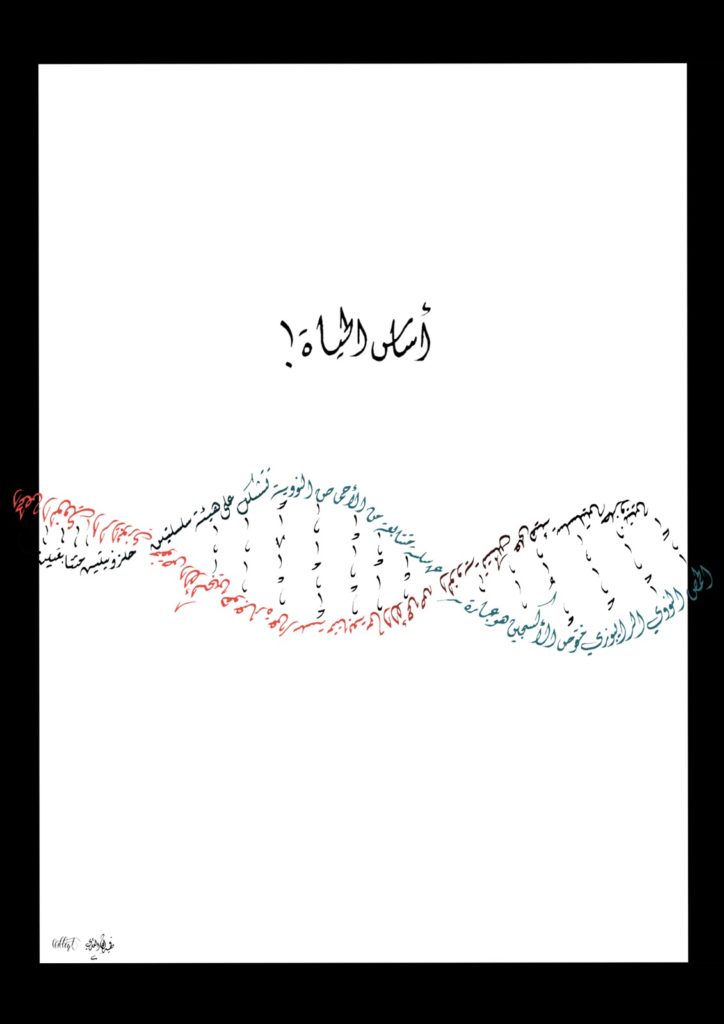
 

Arabic calligraphy and DNA

This is a very nice creative work one of my former students, Fahad Alenizi.  Fahad is a very talented Arabic calligrapher especially in Dewani style.  This work was a collaboration between Fahad and my graduate student Huda Alaskar, a promising English calligrapher and the person who digitized the work.

الإبداع في الإبداع

  • الكثرة تغلب الشجاعة وكثرة ال (Methylation) في ال (CpG islands) تغلب شجاعة ال (RNA pol)

شريفة إبراهيم


  • DNA said to mRNA at a checkpoint:
أكاد أشك في نفسي لأني أكاد أشك فيك وأنت مني

سارة سعيد


هو الكون حي يحب الحياة
ويحتقر ال (mutation) مهما كبر
فلا الأفق يحضن غريب الطيور
ولا النحل يلثم عجيب الزهر
ولولا أمومة قلبي الرؤوم
لما ظل لل (mutation) مستقر

آمنه عبدالله


نقولهم تيس ويقولون إحلبوه. ونقولهم (DNA strand) يقولون سوو له (Translation)

فاطمة سليم


ال (RNA interferance) مطبق مقولة: الحشرة مع ال (molecules) عيد

سارة فهد


خط ال (Repressors and activators) بال (Nucleus) واقعد بالظلال

دلال خليفة


The difference between the ordinary and the extraordinary is just the little “Extra”. This is just like the “Extra” chromosome in Down syndrome

Sara Zeyad


  •  هذا الشبل من ذاك الأسد. وهذا ال (chromatin) من ذاك (chromosome)
  • الشريجة تحر ولو بالقبر وال (repressor) يحر ال (activator) ولو بال (DNA)
  • كثر الدق يفك اللحام وكثر ال (abortive initiation) يفك ال (RNA pol) عن ال (promoter)

مشاعل الكندري


ربع(ن) تعاونوا ما ذلوا. مثل ال (helicase) و ال (helicase loader) يتعاونون على ال (DNA double strands)

ريوف فايز

Splicing a giant

Here is another thoughtful story by my active, enthusiastic, and outstanding student, Zahraa Hasan.


When I studied alternative splicing in 281 course, the instructor [Hasan] said that the possible combinations are unlimited [exaggeration by Hasan]. I wanted to see if it is truly unlimited or it is possible to calculate it.

I thought that I can calculate it by using permutations and combinations but those approaches did not work. The Permutations did not work because it allows the second exon to become before the first exon, and this is not possible in genes. Combinations did not work because it does not deal with the order. So, I realized that I had to find the formula that can be used for this process by trying every possible combination for the exons. At the end I found it : 2(#of exons – 2). The (-2) is in the formula because the first exon contains the AUG codon (the beginning of the gene), and the last exon contains a stop codon, so a protein cannot theatrically be synthesized if either the first exon or the last exon is not included.

Given:

  1. The human gene with the largest number of exons is (TTN gene)
  2. TTN gene has 363 exons.
  3. TTN gene cDNA size is 82Kb.
  4. TTN codes for Titin protein.
  5. TTN protein contains 26,926 amino acids and a mass of 2993kDa.

The theoretical possible combinations of TTN exons would be

2(363-2) = 4.69×10108 possible combinations !!!

This formula can be used only for skipping exons in the alternative splicing process.

To the moon and back

The following is a nice thoughtful story by the outstanding student, Zahraa Hasan.


I have been told at high school that the genome of one person can reach the moon and back to earth and I want to see if that is true.

To find if the genome can reach the moon, I must first calculate the length of the genome in one cell then multiply it by the number of cells in a human body. Then I must divide that number by 3.84 x 10⁵ km (the distance between the Earth and the moon in km).

Given:
  1. Human haploid cells contain 3 billion base-pairs (3×10⁹ bp).
  2. Humans are diploid organisms.
  3. A diploid human cell contains 6 billion base-pairs (6×10⁹ bp).
  4. The distance between the basepairs in a B-DNA (the one that is found in a human body) is 0.34 nm (0.34×10⁻⁹ m).
  5. The estimated number of cells in a human body is 37.2 trillion cells (37.2×10¹² cells).
  6. The distance between the earth and the moon is only 3.84 x 10km

Length of DNA in 1 haploid cell: (3×10⁹ bp)*( 0.34×10⁻⁹ m) = 1.02 m

Length of DNA in 1 diploid cell: (6×10⁹ bp)*( 0.34×10⁻⁹ m) = 2.04 m

Length of DNA in all human diploid cells:
(2.04×10⁻³ km/diploid cell)*(37.2x 10¹² diploid cells) = 7.59×10¹⁰ km
or
(6×10^9 bp)*(0.34nm/bp)*(37.2×1012 cell/human body) = 7.59×10¹⁰ km

Going to moon: (7.59×10¹⁰) ÷ (3.84×10⁵) ≈ 197,656 times

Going to the moon and coming back: 197,656/2 ≈ 98,828 times

It means that the genome of one person can go to the moon and come back to earth 98,828 times!!!


Creative work by students at Kuwait University

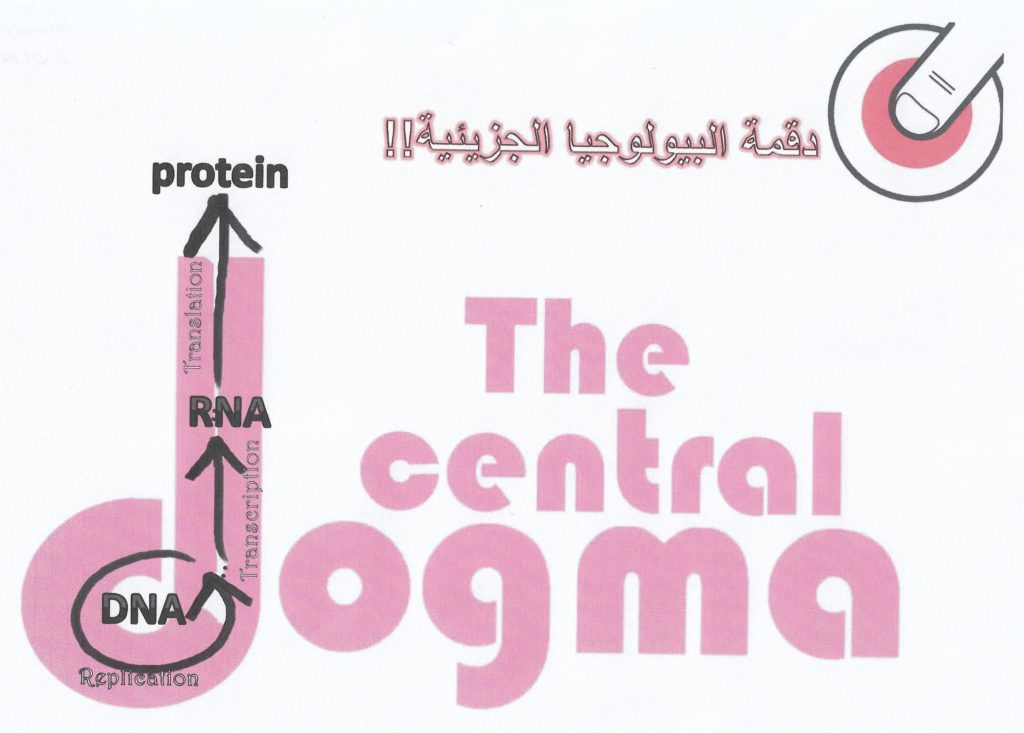
عمل مبدع من الطالبة سلمى عبدالعزيز بخصوص ال (Central Dogma of Molecular Biology) وتوصيف ال (Dogma) بالدقمة والذي يعني زر لكن باللهجة الكويتية قمة في الابداع.


هذا العمل من تقديم الطالب عبدالعزيز الكندري في مقرر الادلة الجينائية.  شكل ال (DNA) هو (Double helix)


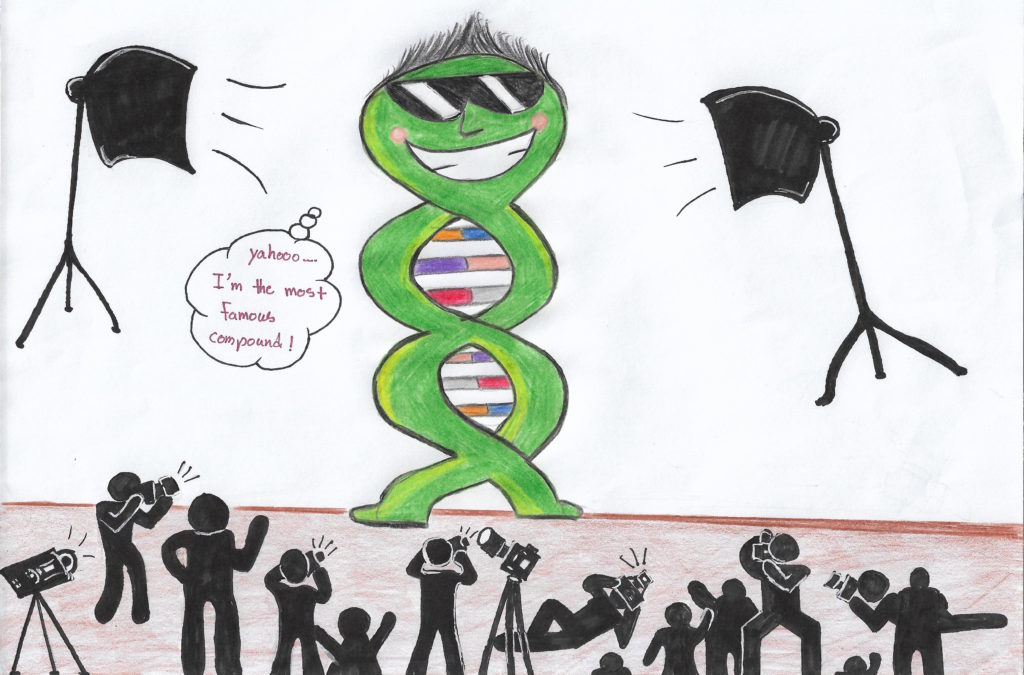
This art work is done by my student Sara Fahad for the Intro to Mol. Biol. course (281).  I agree that DNA is the most famous molecule.


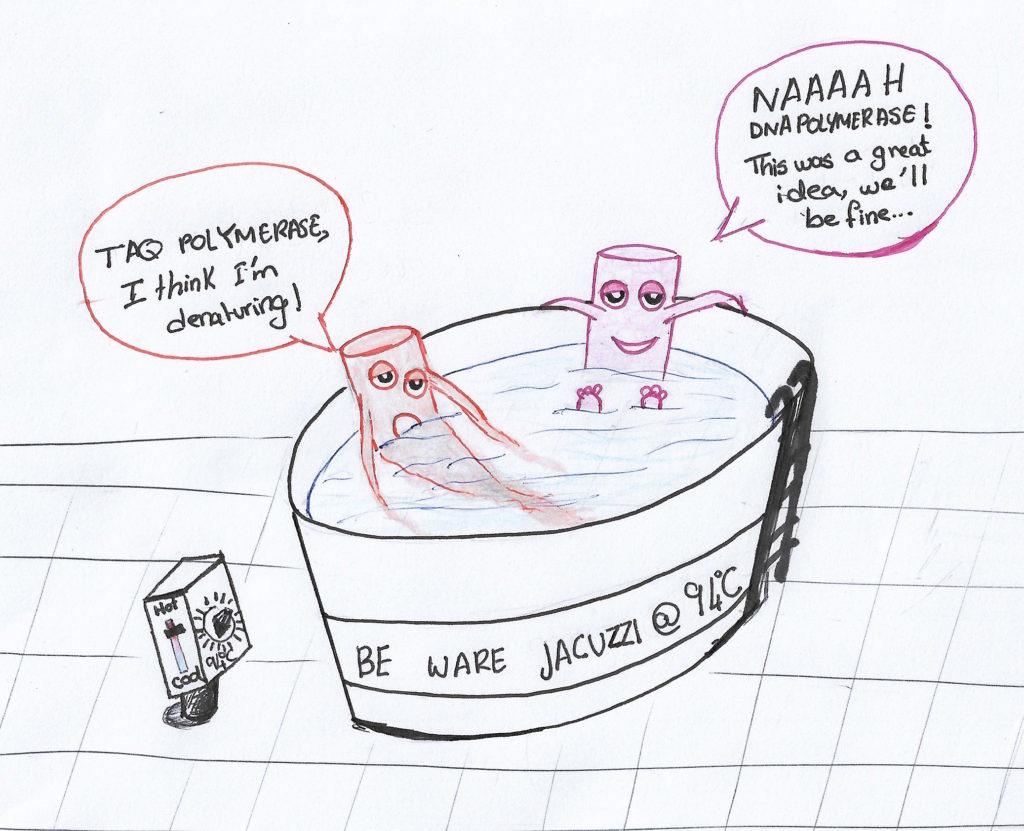
This is a very beautiful idea and artwork by Unknown Student (thus far) from my forensic course (301).  The drawing shows Taq Polymerase enjoying a jacuzzi bath (first phase of PCR) while norman DNA polymerase is denaturing.  Very nice!

أعمال إبداعية من طلبتي

  • كل شارب وله مقص وكل (DNA) وله (Restriction Enzyme/Endonuclease).

شهد الشهاب


  • كلنا عيال قرية وكل من يعرف أخيه. مثل ال (DNA) كل (Nucleotide) يعرف أخيه.

شمايل بدر


  • تمنيتك يال (mutation) عون بس طلعت لي فرعون.

شوق الخالدي


  • من طق طبله قال أنا قبله. مثل ال (Activator and Repressor) وال (competitive DNA binding).

مريم فيصل


  • خاويني وأخاويج (Activator and Repressor)  وآخذ ريلج وأخليج (competitive DNA binding).

فاطمة فهد


  • الظفر ما يطلع من اللحم وال (Nucleotide) ما يطلع من ال (Strand).

آمنه يوسف


  • ليتك (Lytic) ما سويتها يا بو جاسم وقتلت مرتك. اهرب ليسجنوك (Lysogenic).

ميار سميح


  • In mathematics 20 can’t equal 64 but in molecular biology it can (the genetic code).

Mayar Sameeh


  • (Shine-Dalgarno) واقف عالحيطه لابس برنيطه قبال كل (Start codon) مرتز.

سارة فهد


  • UGA says I wish whereas AUG says I will.

Sara Zeyad


من بصمتك هذي يا المجرم اللعاب
كم خلية تحللت وعانت مع البرايمرات
من كثر ما استبعدوا أغلب الناس
شفهم ترى زادوا عدد الماركرات

نوال الشمري (٣٠١)


  • يا ناقش الحنه على باطن الكف. ويا كاشف البصمة من باطن الكف

نوال الشمري (٣٠١)


  • الثوب الي أطول منك يعتك. وال (Slippage) في ال (DNA) بالتحليل يفضحك

إبراهيم الشمري (٣٠١)


  • أتمنى لو قلمي فيه خاصية ال (Proofreading) يصحح أخطائي من وراي بالإمتحان مثل ال (DNA Pol)

فاطمة مهدي


  • رزق القطاوة على الخاملات. ورزق ال (Pol proofreading) على (Pol errors)

سارة فهد


إذا ال (DNA) يوماً أراد الحياة
فلا بد أن يستجيب ال (polymer)
ولابد لل (double helix) أن ينجلي
ولابد لل (hydrogen bond) أن ينكسر

آمنة عبدالله


  • تقول البكتريا لل (bacteriophage): البيت بيت أبونا والقوم حاربونا

شريفة إبراهيم


  • الي ما يطوله ال (DNA Pol) يوصله (Ligase)

أسماء عبدالوهاب


حلاة الثوب رقعته منه وفيه
complementary base-pairing in DNA double helix

بدر عماد


  • يقول شكسبير: هكذا أنا أحمل على كتفي سر الأشياء. استطعت أن أتجول عبر العالم مثل جاسوس دون أن أغير مكاني ودون أن أتحرك من على كرسي
  • وال (DNA) يقول: هكذا أنا أحمل على كتفي سر الجينات. أجول بها عبر الأجيال مثل جاسوس دون أن أغير مكاني في الخلية.

إيمان القلاف


Beautiful artwork by a number of my students

This the artwork of Afrah Eid. I think this was inspired by my lecture about model organisms in the Introduction to Molecular Biology course (281).


This is an amazing artwork by Amna Mousa. Amna was a student in the DNA Forensic course (301) that I partially teach with Prof. M. Abaza.  The artwork is related to my lecture about microsatellite markers, which are also known as short tandem repeats.


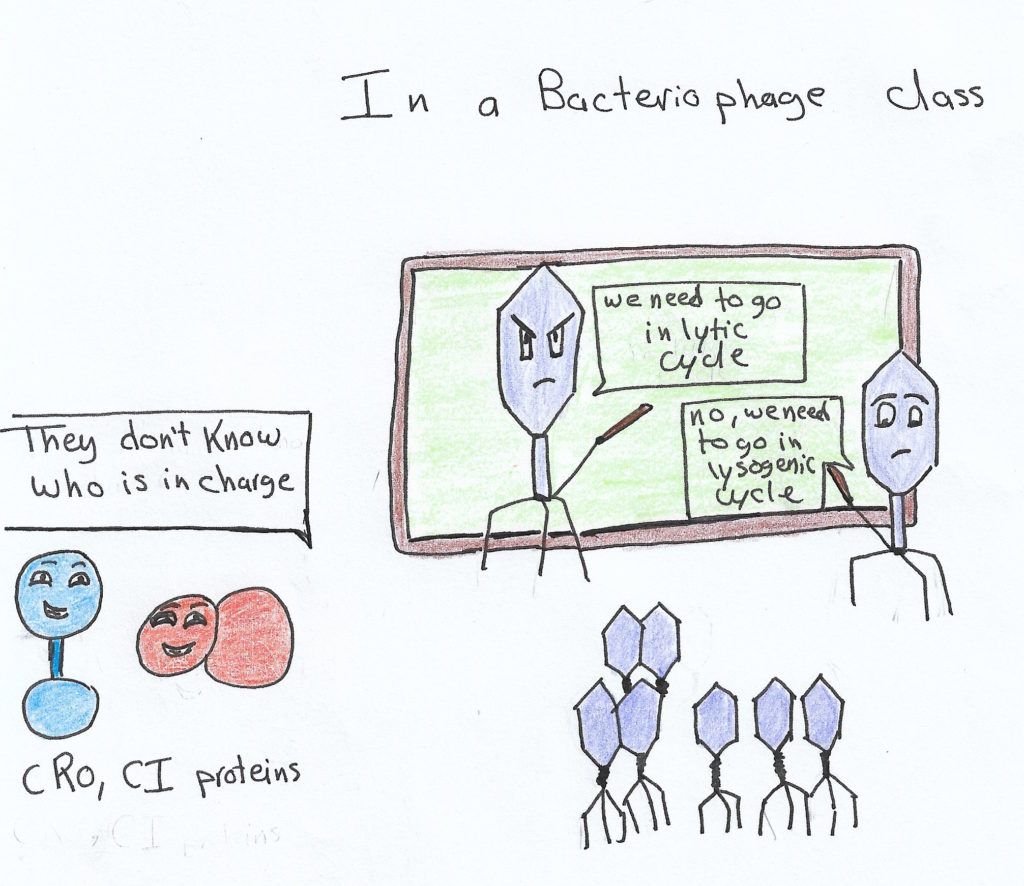
This is the artwork and idea of Anfal Ali in my Intro. to Mol. Biology course (281).  The work is related to my lecture about the lambda phage repressor.


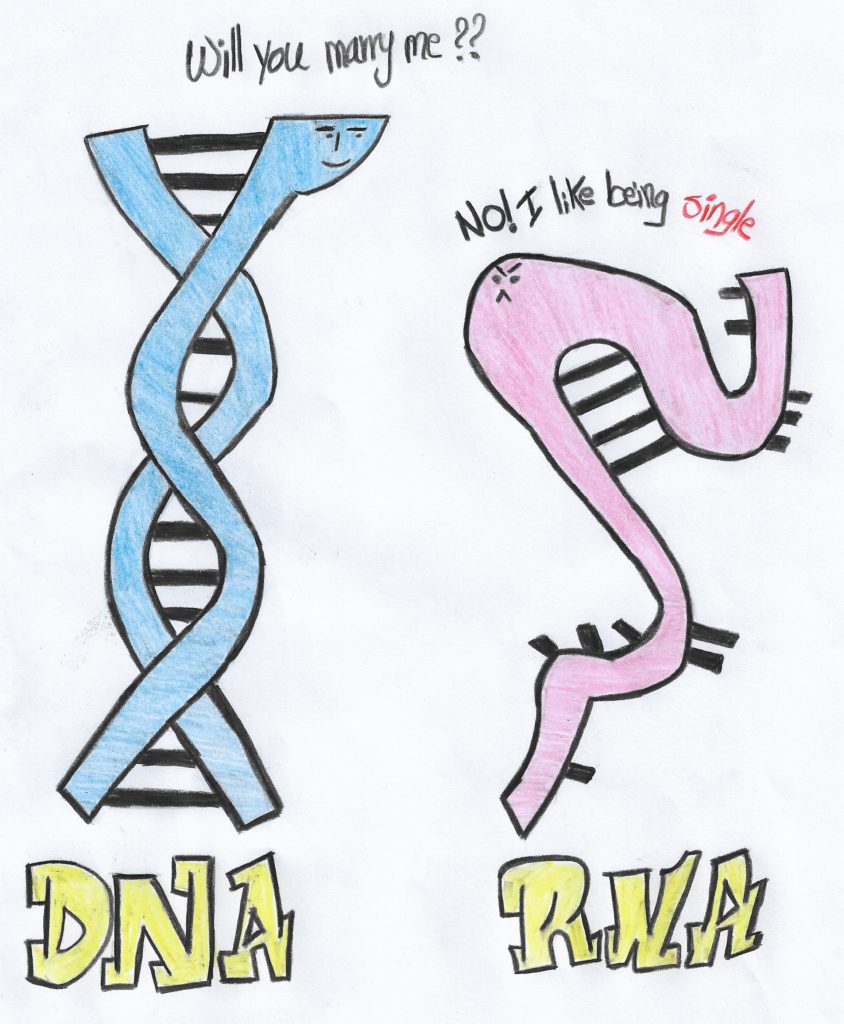
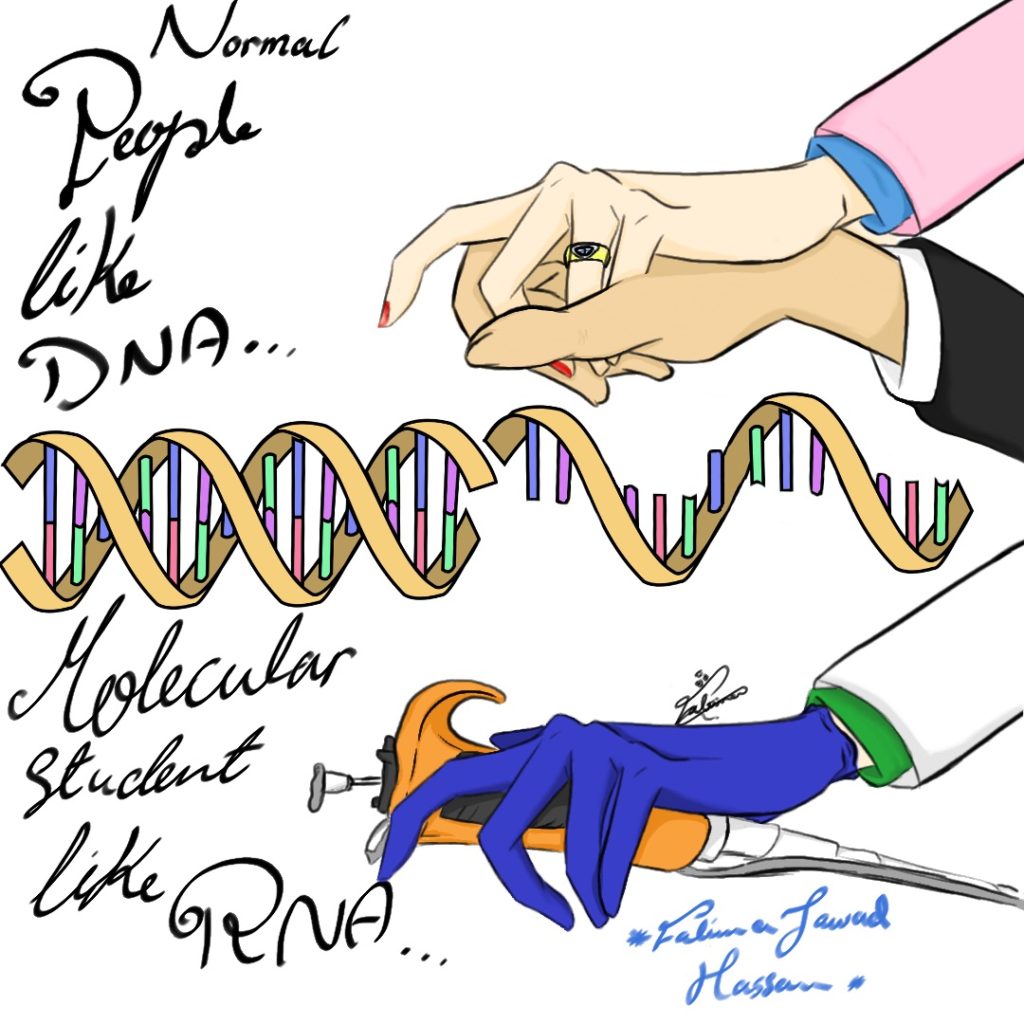
This is the work of Asma Abdulwahab (Intro. to Mol. Biology – 281).  The work is related to the structure of DNA and RNA.


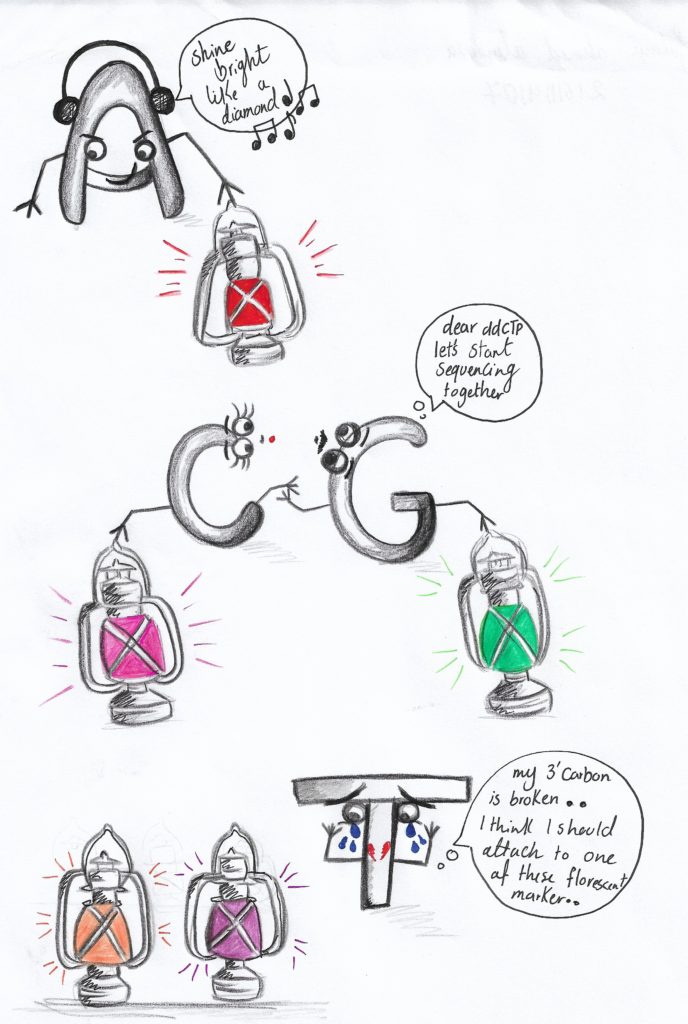
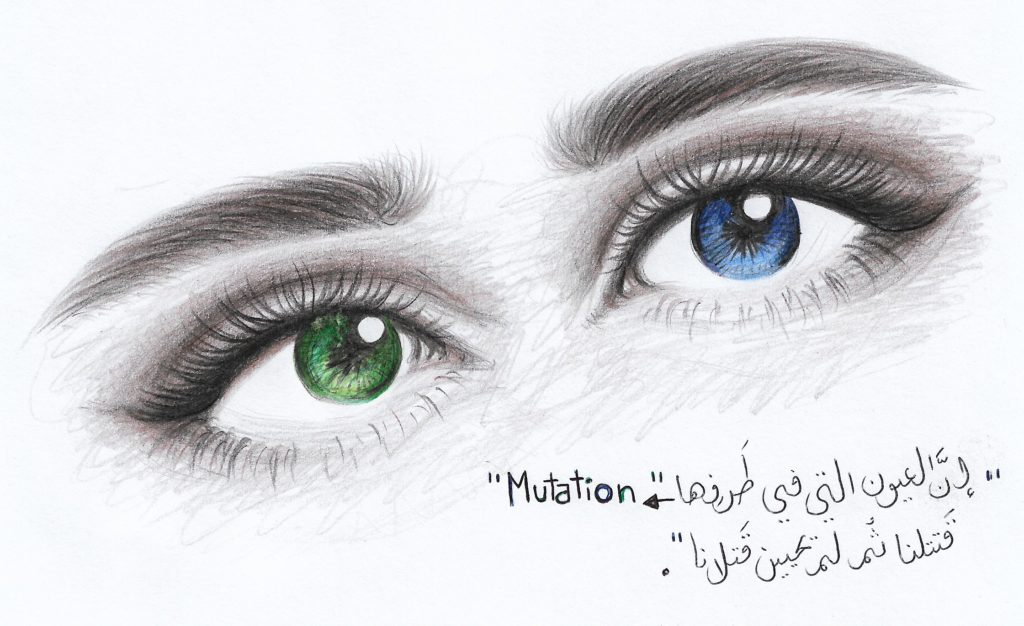
The following are some drawings by a very talented artist and an excellent student Fatimah Almousa.  Fatima attended my Intro to Mol. Biol. course (281) last semester and also attended DNA Forensic course (301).  Below are the amazing ideas and drawings.

  1. This artwork is related to Sanger sequencing method with a cultural touch.  The automated chain termination method uses dideoxynucleotides that each is marked by a specific fluorescent marker.

2. This work is related to the effects of environmental factors in the path of gene expression.

3. This work is related to somatic cell mutations and the examples provided in class.

4. This is the last piece of Ms. Fatima thus far and it is related to the methylation of CpG islands near promoters of some genes, which cause the inhibition of gene expression.


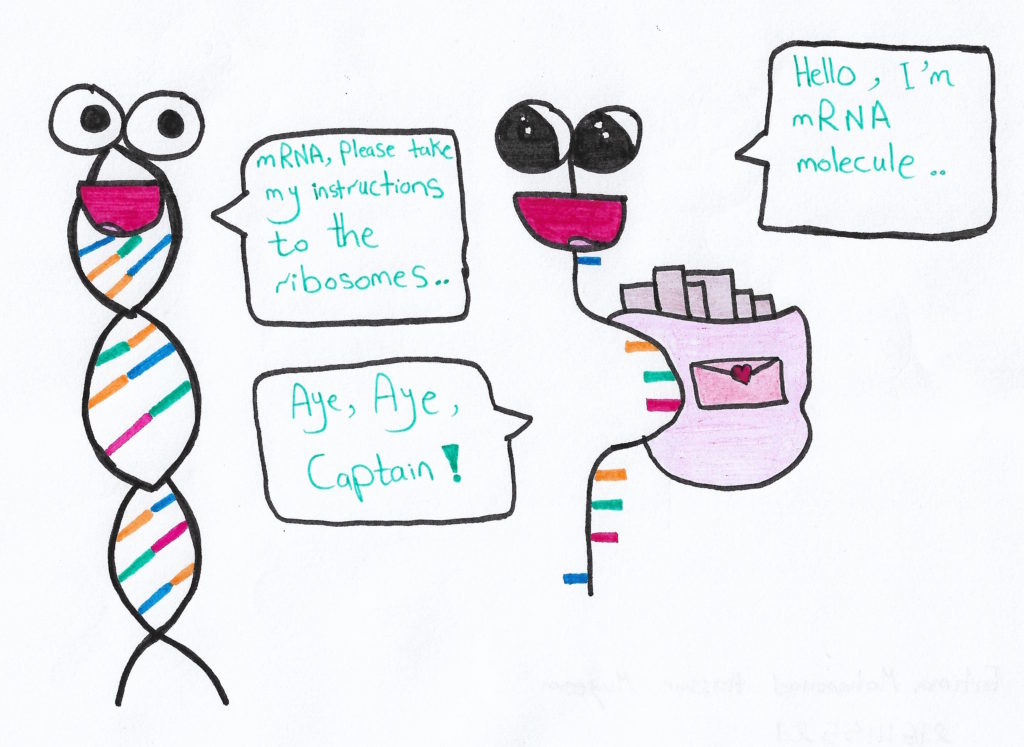
This is the idea and drawing of Fatima Mohammed for the Intro. to Mol. Biol. (281) course.  The work is related to the function of the mRNA.


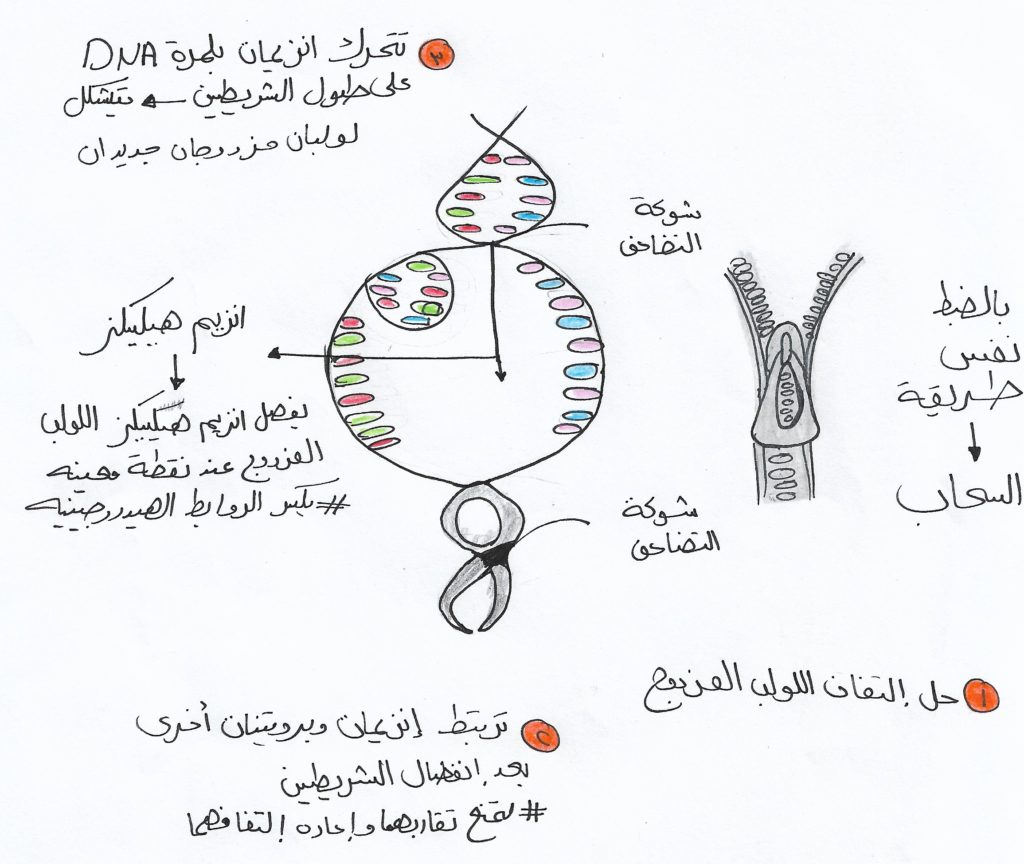
هذا عمل الطالبة فاطمة ناصر في مقرر مقدمة البيولوجيا الجزيئية. أعجبني في هذا العمل الترجمة للأفكار باللغة العربية. عمل ممتاز


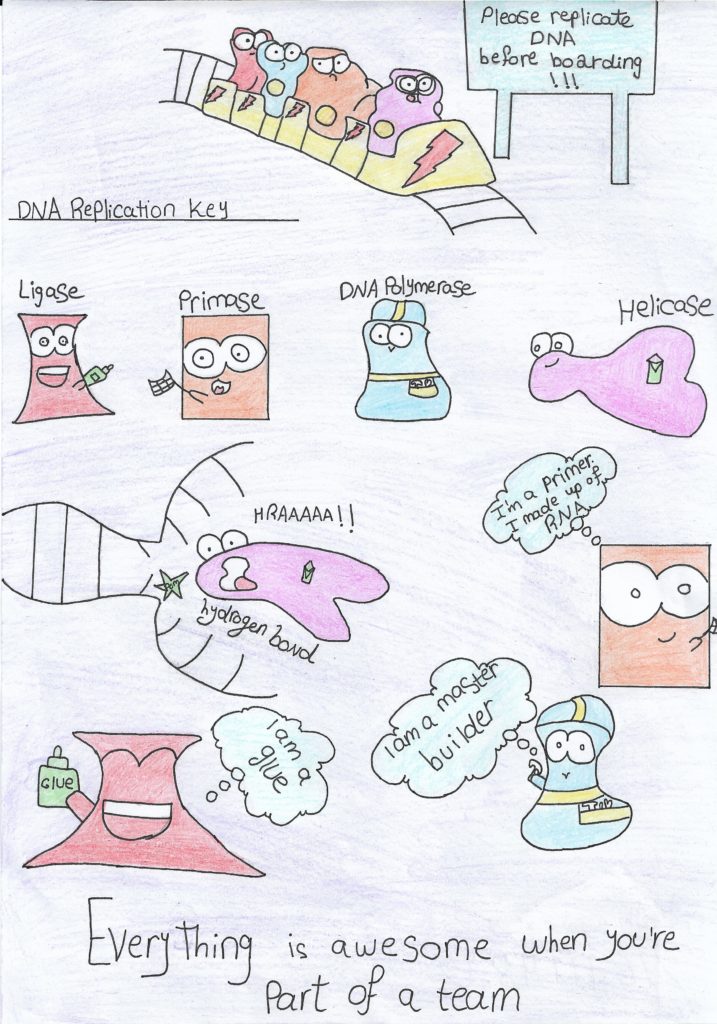
This is the work of Fay Majed for the Intro to Mol. Biol. class (281).  The work is related to DNA replication and the enzymes and proteins related.